Build the room around the work
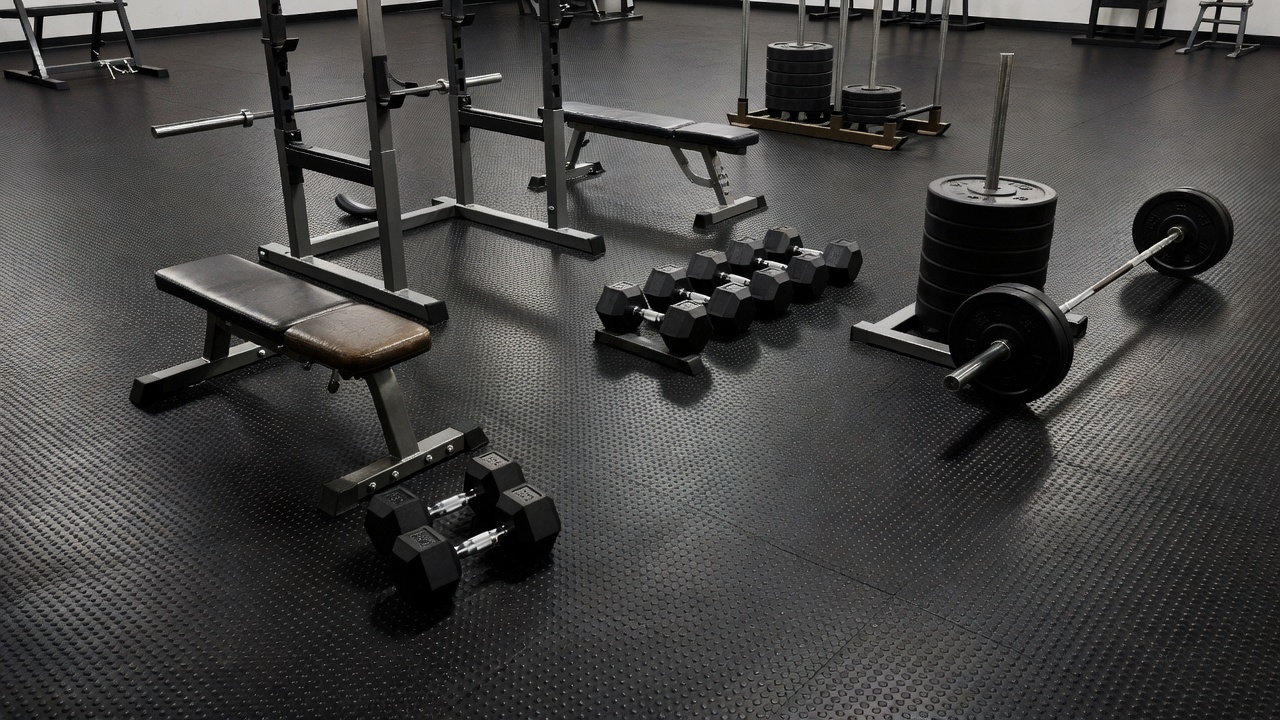
Conditioning spaces for hockey can contain free weights, racks, benches, resistance bands, medicine balls, stationary cycles, mobility tools and open floor area. No single inventory defines a good room. Equipment should match the training plan, the age and experience of the athletes, the available supervision and the way groups use the space. A thoughtfully arranged room may serve a session better than a crowded room filled with equipment that is difficult to access.
Start by looking at movement and circulation. Can players carry equipment without cutting across a lifting station? Is there room to move safely around a rack? Are walkways clear, and are frequently used items stored where staff can check them? Rubber flooring can help provide a durable training surface, but its condition matters. Loose edges, wet patches or clutter deserve attention before activity begins. Facility staff should maintain the space and set the rules for use.
A useful layout separates activities that need different kinds of attention. A supervised lifting area, an open movement zone and a warm-up space can reduce unnecessary interference. The divisions do not need to be elaborate; clear sight lines, stable storage and simple floor markings can make a shared room easier to manage. Coaches should also explain where players wait, how stations rotate and what to do when a piece of equipment is unavailable.
Conditioning complements skating
Ice training develops sport-specific movement in an environment where a blade, puck and opponent shape the task. Off-ice physical preparation can address broader qualities such as strength, balance, coordination and general work capacity. The relationship between the two should be planned by qualified coaches and conditioning professionals. A weight room is not a shortcut to skating skill, and adding more sessions without accounting for recovery can make a schedule less effective.
Training choices vary by athlete, season, training history and medical guidance. The same exercise may not suit every player. Supervisors can scale a task, adjust the load or choose another movement based on technique and readiness. A facility should make that supervision practical: equipment needs to be visible, instructions should be understandable, and staff should know how to respond if a participant reports pain or discomfort.
The day’s sequence matters. An athlete might complete an on-ice session before a brief physical preparation block, or the plan may place strength work on a different day. Coaches consider the goal, intensity and timing when making that choice. Transitions should allow players to remove wet equipment, change footwear, hydrate and arrive in the next space ready to listen. Rushing through a doorway with skates or carrying gear across an active training zone creates avoidable hazards.
Choose equipment for access and care
When evaluating a training room, consider whether the equipment supports a range of appropriate progressions. Adjustable benches, manageable weights and bands can help staff adapt exercises. This does not mean every room needs every possible device. It means that the equipment present should be maintained, correctly stored and used for a clear purpose. Labels and checklists can help participants return items and flag damage.
Strength equipment has wear points. Cables fray, bolts loosen, benches tear and plates can become difficult to handle if storage is poor. A routine inspection by responsible staff helps catch issues before a busy group arrives. Players should be encouraged to tell a supervisor about damaged or unstable items rather than improvise a repair or use them anyway. Facility operations and coaching practice work together here: one keeps the room serviceable, and the other ensures the session respects the equipment’s limits.
Cleanliness and ventilation also matter. Hockey gear can bring moisture and odor into adjacent areas. A conditioning space needs a practical cleaning routine and enough separation from drying equipment to remain comfortable. Water access, waste bins and a clear exit route are basic provisions, not luxury extras. If a facility accommodates multiple age groups, posted expectations help each group share the room responsibly.
Use the space for more than lifting
Open floor can be valuable. Coaches may use it for balance tasks, controlled movement, mobility work or low-risk puck-handling activities when suitable. A short turf lane or smooth training strip can support simple movement patterns, provided the surface, footwear and supervision match the task. Such zones should not be treated as substitutes for ice; they offer a different context in which a coach can teach and observe selected skills.
Recovery is another part of a conditioning environment, although it should be approached with care. Seating, hydration access and quiet space can support transitions. Any more specialized recovery practice should be based on appropriate professional guidance and individual needs. Facilities should avoid presenting a device or routine as a guaranteed solution. The practical question is whether players have time and a safe place to finish the planned work, report concerns and prepare for what follows.
Good communication connects conditioning with practice. A coach may note that a player needs more time to learn a movement, or a player may report unusual fatigue. A concise handoff helps the relevant staff make informed adjustments. The room’s layout can assist by offering a board, schedule or designated meeting point, but the quality of communication comes from people, not signage alone.
Assess the connection, not the hardware count
Parents and players can ask who supervises the room, how new athletes are introduced to equipment, how the program adapts for different training ages and how concerns are reported. They can also notice whether staff model safe setup, whether equipment is stored neatly and whether players understand the session’s purpose. A polished rack cannot answer those questions on its own.
When the conditioning room is integrated with ice access, changing facilities and coaching feedback, it becomes a useful part of the training environment. That connection might be a straightforward schedule and a clear route from one activity to the next. It does not require a grand architectural feature. The best evidence is often ordinary: a coach has time to explain the task, the space is ready, players can move without crowding, and the activity fits the broader plan.
Think of the room as an adaptable workshop. Equipment provides options, flooring provides a platform, and supervision gives the work its direction. The question is not whether a complex has the newest machine; it is whether the space helps staff deliver appropriate preparation and lets athletes understand how that work relates to their day on the ice.